How to care for an oil painting at home
By Volodymyr Myriyevskyy · 7 August 2026 · 4 min read
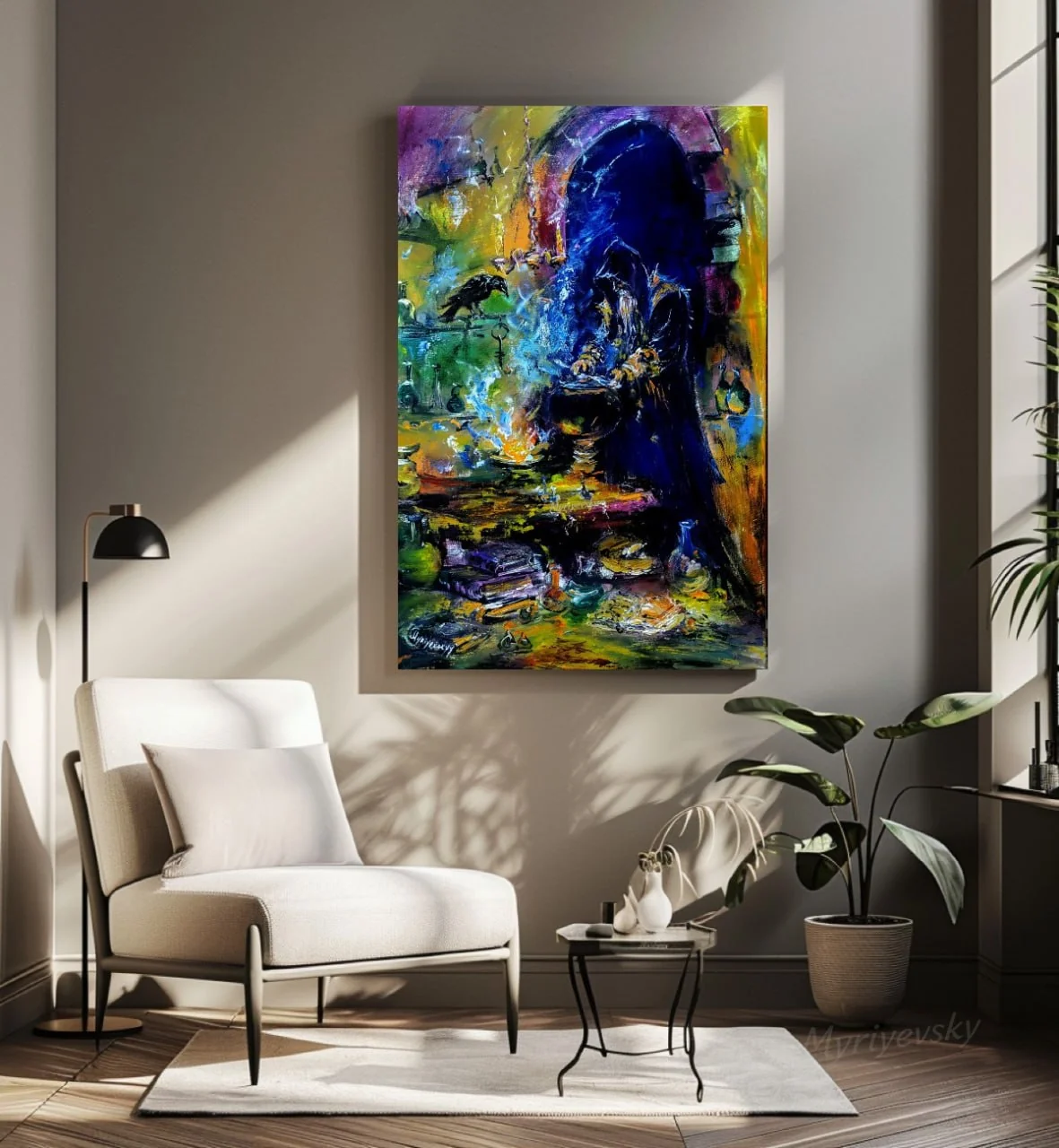
Dust it with a dry, soft brush a couple of times a year, and stop there. Keep it out of direct sunlight, away from radiators and bathrooms, and in a room with reasonably steady humidity. Never use water, cleaning products, alcohol, or a damp cloth on the paint.
An oil painting kept in ordinary living conditions will outlive everyone reading this. Nearly all the damage that does happen at home comes from three things: sunlight, heat, and someone deciding to clean it. The good news is that the correct amount of maintenance is close to none.
What actually harms a painting
| Risk | What it does | What to do instead |
|---|---|---|
| Direct sunlight | shifts pigments and yellows the varnish unevenly | hang on a wall that never takes direct sun; indirect daylight is ideal |
| Heat — radiator, fireplace, spotlight too close | dries and embrittles the paint film, cracks it in time | keep at least a metre from a heat source; use LED lighting, which runs cool |
| Swings in humidity | the canvas expands and contracts and the paint has to follow | steadier matters more than lower — avoid bathrooms and unheated holiday houses |
| Water or cleaning products | dissolves varnish, lifts paint, leaves permanent bloom | nothing wet, ever |
| Pressing on the canvas | leaves a dent that stays | carry a stretched canvas by the frame, never by the fabric |
Cleaning: less than you think
Twice a year, take a clean, dry, soft brush — a wide, soft make-up brush or a new goat-hair brush is perfect — and sweep the dust off gently, working from the top down. That is the whole procedure.
What not to use, and this list exists because every item on it has ruined somebody's painting: water, soapy water, a damp cloth, glass cleaner, furniture polish, olive oil, bread (yes, it is an old wives' tale that gets repeated), alcohol, baby wipes, and a vacuum cleaner nozzle. Varnish is soluble; several of those will take it off, and some will take paint with it.
If a painting is genuinely grimy — decades of smoke or a kitchen wall — that is a conservator's job, not a home one. Cleaning and re-varnishing an oil painting is a routine professional treatment and it costs far less than replacing a ruined one.
Does it need to be varnished?
Not by you. A final varnish is normally applied by the painter six to twelve months after the work is finished, because the paint has to cure properly first — varnishing too early traps solvents underneath. If a painting reaches you without a final varnish it is not a defect, and there is nothing you need to do about it.
Framing, and whether you need it
A gallery-stretched canvas with painted edges is designed to hang as it is; that is why these arrive ready to hang rather than needing a trip to a framer. A frame is a decorative choice, not a protective necessity.
If you do frame one, two things matter: use a float frame or a rebate deep enough that nothing presses on the paint surface, and do not put glass directly against an impasto painting. Glass in contact with thick paint will eventually stick to it.
Moving house with a painting
- Cover the face with a smooth, non-stick sheet — not bubble wrap directly against the paint, which embosses its pattern permanently.
- Protect the corners, which is where every impact lands.
- Transport upright, on edge, never flat under other objects.
- Do not leave it in a hot car or a cold van overnight — that swing does more harm than the journey.
- If you kept the original shipping box, use it. It was cut for that exact canvas.
What if the surface gets marked?
Do not try to fix it. Do not rub it, do not touch it up with anything, and do not apply solvent. Photograph it in good light, and ask. Small surface damage is very often repairable by a restorer at modest cost, and the most expensive outcome is nearly always a well-meant home repair that has to be undone first.
Questions people ask
How do you clean an oil painting at home?
With a dry, soft brush, twice a year, working from the top down. Never use water, damp cloths, alcohol, glass cleaner or any household product — they dissolve varnish and can lift paint.
Can an oil painting hang in a bathroom or kitchen?
Neither is ideal. Steam, grease and swings in humidity are the problem rather than the room itself. A steady environment matters more than a dry one.
Does an oil painting need to be varnished?
It may be varnished by the painter six to twelve months after completion, once the paint has cured. It is not something the owner needs to do, and varnishing too early traps solvents in the paint film.
Should an oil painting be framed behind glass?
Not usually, and never with the glass touching the paint. A gallery-stretched canvas with painted edges is made to hang unframed; if you frame it, leave a real gap between glass and surface.
I paint these in my own studio on the Spanish Mediterranean coast. Every painting is a one-of-a-kind original oil on canvas — signed, with a certificate of authenticity in your name, shipped stretched and insured.
See the paintings